
Special Interview:
Our Three-Pronged Capital Policy
Building on our achievements
under the Seventh MTMP, we are
now entering a new stage with our
three-pronged capital policy
Taisuke Matsuoka
Representative Director,
Senior Executive Officer
In charge of Corporate
Planning Dept. and Finance Dept.
Mr. Norimasa Shinya
Senior Analyst
Equity Research Dept.
Mizuho Securities Co., Ltd.
Vision behind our capital policy under the Seventh MTMP and its reception by capital markets
- Matsuoka
- The Cosmo Energy Group had faced ongoing challenges in terms of our financial health, stemming from the impact of the accident caused by the 2011 Great East Japan Earthquake and significant inventory valuation losses due to falling crude oil prices, among other factors.
Under the Sixth Consolidated Medium-Term Management Plan (hereafter, "the Sixth MTMP"), we worked to strengthen profitability and our financial position, achieving moderate success in our efforts. Building on this, the Seventh Consolidated Medium-Term Management Plan (hereafter, "the Seventh MTMP") focuses on the enhancement of enterprise value based on three pillars: profitability, capital policy, and expected growth.
- Mr. Shinya
- Having covered your company for many years as a sell-side analyst, I feel that you solidified your foundation through your efforts up to the Sixth MTMP and, on that solid footing, have taken a significant step forward with the Seventh MTMP.
- Matsuoka
- Our capital policy, announced as part of the Seventh MTMP, adopts a three-pronged approach that places equal emphasis on shareholder returns, financial health, and capital efficiency. By executing this policy, we seek to sustainably enhance enterprise value.
- Mr. Shinya
- Regarding your capital policy, I believe that, in addition to your ambitious shareholder returns target, the incorporation of capital efficiency—highly valued by investors—as one of your financial health objectives has contributed to positive market evaluations. Specifically, your target total payout ratio of 60% or more is approximately 10 percentage points higher than that of your industry peers. On the financial health front, your company has not only demonstrated ongoing improvement but has also set a target net worth of ¥600.0 billion, reflecting what you have determined to be an appropriate level in consideration of capital efficiency. I regard your announcement that anything beyond this target will, in principle, be returned to shareholders as a symbolic move unprecedented in the energy industry.
Achievements and challenges during the first two years of the Seventh MTMP and points of interest for investors
- Matsuoka
- Although we defined three pillars for enhancing enterprise value under the Seventh MTMP, neither shareholder returns nor growth investment can be realized without strengthening profitability. This underlying profitability is supported by the Petroleum Business—whose strength lies in its short-position strategy—and the Oil Exploration and Production Business, with its long-standing stable operations in highly profitable exploration blocks in the Emirate of Abu Dhabi.
- Mr. Shinya
- In today’s environment, while new initiatives often garner attention, investors want to see companies generate efficient and high returns by concentrating capital investment in businesses in which they have proven strengths and a track record of success. In your company’s case, this approach—focusing limited resources on your core Petroleum and Oil Exploration and Production businesses—has generated strong returns. I believe this has led to return on equity (ROE) exceeding that of industry peers, which the stock market views favorably.
Despite concerns over the transition to carbon neutrality and declining demand for petroleum products due to Japan's shrinking population, the stock market primarily expects companies to first generate solid profits in sectors where they have established strengths. Investors then closely evaluate how the resulting cash is appropriately balanced and allocated among growth investments, shareholder returns, and financial health. From this perspective, looking back over the past two years, I believe your company has earned a solid level of trust from the stock market.
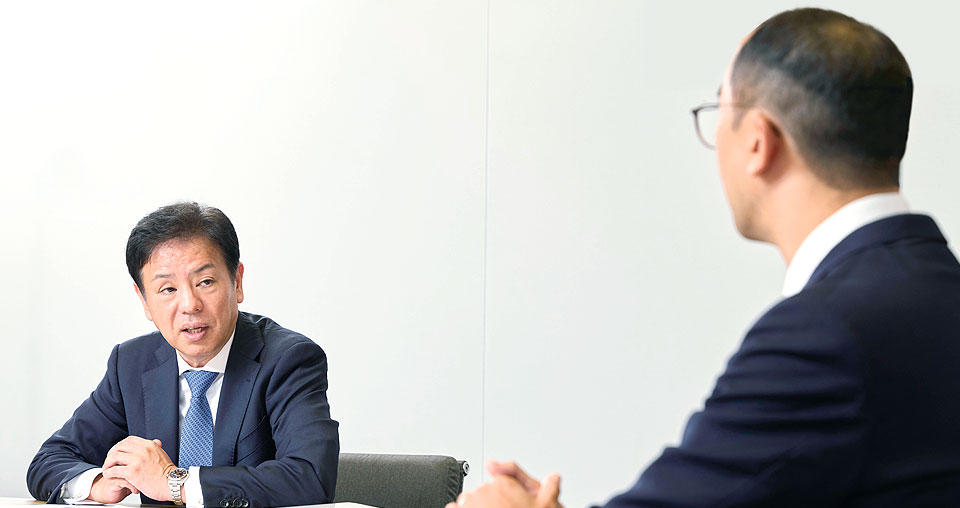
- Matsuoka
- As acknowledged by the stock market, we have nearly met all of our major financial KPIs as of the second year of the Seventh MTMP, while successfully executing our planned capital policy.
On the other hand, from the perspectives of profitability and investment, we face two challenges. On the profitability front, conditions in the Petrochemical Business market have deviated significantly from our assumptions at the time of the Seventh MTMP formulation, and we are facing a challenging earnings environment. In response, during FY2024, we sold our stake in HD Hyundai Cosmo Petrochemical Co., Ltd. in the Republic of Korea, exited the para-xylene business, and focused on rationalization and efficiency improvements, including deciding to optimize production in the Chiba area.
From an investment standpoint, we refrained from participating in public bidding for offshore wind power projects due to the deteriorating business environment. We also opted not to invest in certain immature markets, delaying investments in growth areas. As a result, I feel that the Group’s appeal to investors in terms of expected growth may be limited.
- Mr. Shinya
- Your company’s ROE, a key metric for the stock market, has averaged approximately 14% over the past two years. This not only significantly exceeds the Seventh MTMP target of 10% or more, but also ranks among the highest in the industry, reflecting remarkably high capital efficiency. Notably, your consistent efforts to deliver shareholder returns based on KPIs and increase dividend levels are highly commendable.
The two challenges you highlighted have, in some respects, actually contributed to a positive evaluation of your management’s actions. Downsizing or exiting a business has a significant impact on employees and other stakeholders, and I believe such decisions should not be made lightly. However, the ability to respond promptly and decisively to these management challenges can be seen as a notable accomplishment over the first two years of your medium-term management plan.
In addition, while expectations were high for the offshore wind power generation business to be the central focus of New fields, the decision to forgo investment from the standpoint of profitability and capital efficiency was not easy to make. I believe this difficult decision, driven by the pursuit of high capital efficiency, is also worthy of recognition.
Expectations for the final fiscal year of the Seventh MTMP
- Matsuoka
- As FY2025 marks the final year of the Seventh MTMP, we remain fully committed to achieving the targets set forth in the plan.
The elements of our three-pronged capital policy—shareholder returns, financial health, and capital efficiency—are interconnected: a shift in one affects the others. Nevertheless, if everything goes according to plan, we will achieve our defined targets.
- Mr. Shinya
- As you have consistently met the KPIs set out in the Seventh MTMP, I anticipate that additional shareholder returns on net worth exceeding ¥600.0 billion will likely draw increased attention.
- Matsuoka
- In terms of shareholder returns, we are committed to achieving a target cumulative payout ratio of 60% or more over the three-year period of the medium-term management plan. With respect to additional returns, if profits surpass expectations and, after following through on our planned investments, we achieve a net D/E ratio of 1.0 times and net worth exceeds ¥600.0 billion, we intend to deliver on our promise without unnecessarily retaining funds.
- Mr. Shinya
- Although ¥600.0 billion is a symbolic figure, I understand that this is the first time your company has explicitly indicated your necessary net worth, taking into account the business portfolio at the time of the Seventh MTMP announcement and the risks associated with each segment. While this figure may fluctuate with changes in the business environment, what matters is that management allocates cash flow based on a sound understanding of appropriate net worth on the balance sheet. In that sense, the figure of ¥600.0 billion functions as a clear KPI that bolsters investor trust in your company’s governance. I encourage you to continue emphasizing this approach.
Direction of capital policy under the next MTMP and the importance of a growth narrative
- Matsuoka
- The enhancement of enterprise value over the medium- to long-term will remain a universal and enduring priority. As we continue internal discussions in preparation for formulating the next medium-term management plan, we intend to carry forward the underlying rationale of our three-pronged capital policy into the new plan.
We recognize that necessary net worth, one of our financial health KPIs, can vary with changes in the prevailing environment. Although the current rapid inflation is one such environmental change, we are reviewing our target with a view to maintaining a balance between capital efficiency, the impact of growth investments on our financial health, and shareholder returns.
- Mr. Shinya
- Given your company’s steady achievements under the Seventh MTMP, the stock market likely expects even higher returns. In particular, while capital efficiency is already high, we are looking forward to seeing you aim for further improvement.
Moreover, improving capital efficiency requires a higher profit level, which in turn depends on a compelling growth narrative. Within the timeframe of the medium-term management plan, what is realistically expected of your company is the further strengthening of your earnings capacity in Oil fields. At the same time, the trust earned from the stock market offers an opportunity to demonstrate how you can plant the seeds for growth in longer-term business sectors while maintaining balance across the three prongs of your capital policy. In doing so, the most important and challenging part is presenting a narrative that applies the strengths of your current business portfolio to new fields and broadly resonates with investors. Especially for investments in New fields businesses, it is essential that they not only address societal challenges but are also commercially viable. Providing concrete explanations of assumptions regarding the medium- to long-term external environment, expected investment and return levels, and risk mitigation strategies when determining commercial viability will almost certainly help elevate stock market expectations for your company’s growth.
- Matsuoka
- As you mentioned, while shareholder returns are of course important, growth investment is equally indispensable for the sustainable enhancement of enterprise value. In FY2024, we established Japan's first large-scale demonstration facility for domestic SAF production. Although the SAF market is still in its early stages, we will steadily invest in businesses where strong demand is anticipated.
During discussions around the formulation of the next medium-term management plan, our goal is to strike a balance between near-term profit-generating measures and initiatives that sow the seeds for future growth.
- Mr. Shinya
- In the stock market, investors seek out the companies most likely to deliver strong returns on their investments. Companies that earn higher levels of investor trust are more likely to attract more capital and see their stock price increase. From that perspective, I believe it is important not only for a company to have growth businesses, but also to inspire confidence among investors in how funds are used, as this is crucial in determining stock prices. To this end, it is necessary to minimize information gaps between the company and investors as much as possible and to clarify future business strategies, capital allocation policies, and other key agendas.
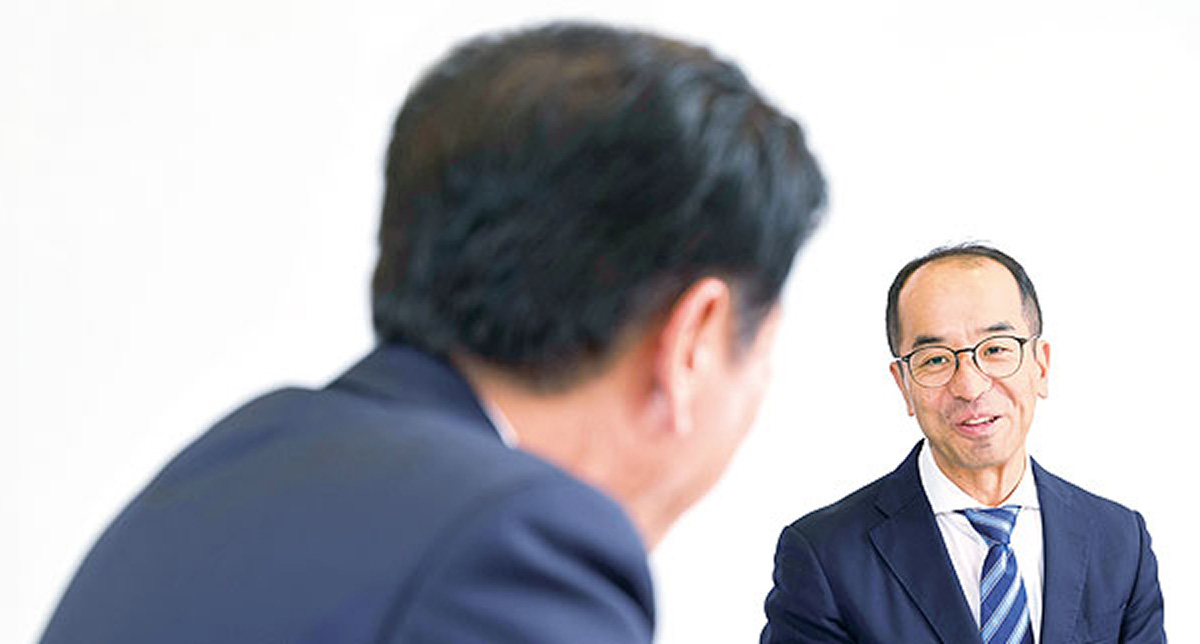
- Matsuoka
- Going forward, we will uphold the foundation of our current capital policy. Moreover, I believe it is our duty to clearly articulate the thinking behind it, together with our growth-oriented business strategies, to capital markets. We look forward to your continued support for our capital policy under the next medium-term management plan.
Information on this page is as of October 2025, the publication date of the Cosmo Report 2025.