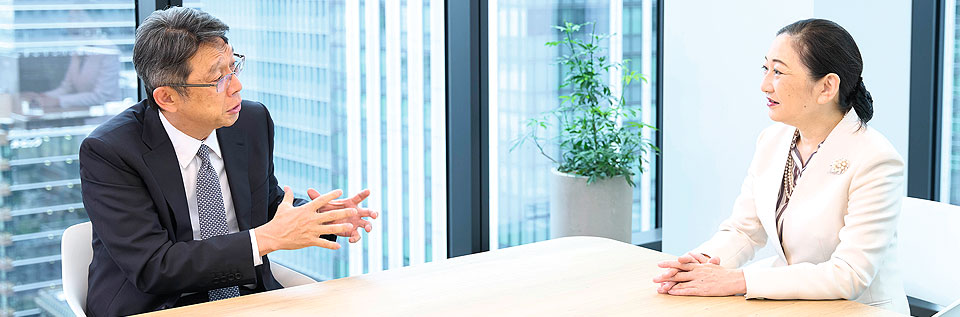
Special Interview: Corporate Governance

Building and evolving
sound governance at the
Cosmo Energy Group:
Current status and future outlook

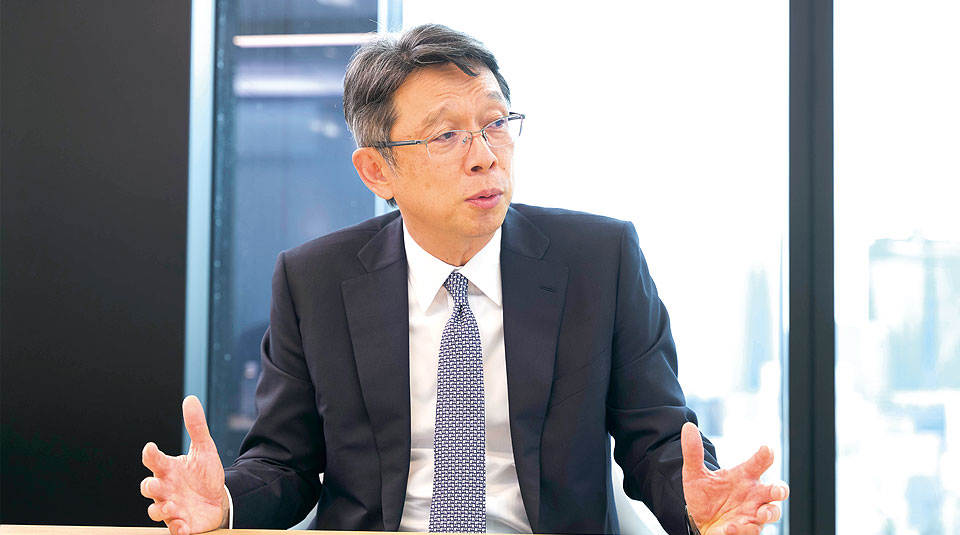
Shigeru Yamada Representative Director,
Group CEO

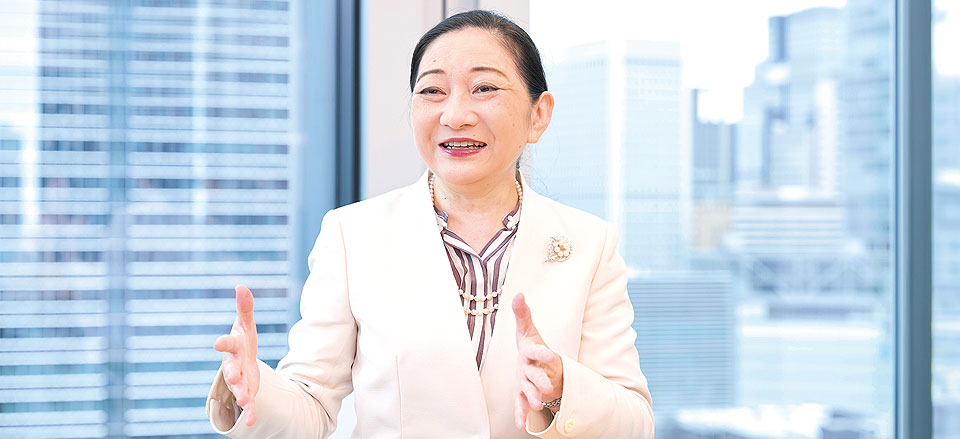
Dr. Chieko Matsuda Professor, Graduate School of Management
Tokyo Metropolitan University
Professor, Faculty of Economics and Business Administration
Tokyo Metropolitan University

Dr. Matsuda's profile

Professor Matsuda has been engaged in research, education, and business practice in the fields of management strategy, particularly corporate-level strategy (business portfolio management), financial strategy, and corporate governance. After working at The Long-Term Credit Bank of Japan, Limited, where she was responsible for international credit review and overseas sales, she went on to work as a credit rating analyst at Moody’s Japan K.K. She later became Partner at management strategy consulting firms, including Corporate Directions, Inc. and Booz & Company, Inc., before assuming her present position. Matsuda holds a Bachelor of Arts from Tokyo University of Foreign Studies, a Master of Business Administration from École Nationale des Ponts et Chaussées, and a PhD in Management from the Graduate School of Business Science, University of Tsukuba. She is currently Senior Researcher at the Japan Association of Chief Financial Officers. In addition, she has served as an outside director for several leading companies and as a committee member for various government agencies and public institutions.
2015 as the starting point of governance: A major turning point toward stronger business execution

Yamada
The Cosmo Energy Group sustained significant damage when our main plant, the Chiba Refinery, was impacted by the 2011 Great East Japan Earthquake. For several years thereafter, the refinery was unable to operate at sufficient capacity, leading to declining profits and a prolonged period of hardship.
Under these circumstances, we recognized the need to further strengthen business execution across the Group’s core Oil Exploration and Production, Petroleum Refining and Sales, and Petrochemical businesses. In 2015, we transitioned to a holding company structure and, at the same time, became a company with an audit and supervisory committee, thereby reinforcing our organizational framework. This marked the starting point for the subsequent strengthening of our corporate governance.
Dr. Matsuda
In 2015, the "Company with an Audit and Supervisory Committee" system was introduced in Japan, with around 1,600 companies having adopted this form of corporate governance since then. Making the transition in the system’s very first fiscal year, however, must have been a courageous decision.
Yamada
Our strong conviction that the status quo was untenable and that change was imperative gave us the resolve to take decisive action. Since 2015, we have consistently pursued governance reforms. As a result, business execution has become more streamlined, enhanced monitoring has improved management transparency and efficiency, and risk management has been further strengthened.
Dr. Matsuda
In many cases, companies take a passive approach to corporate governance reforms, acting only in response to the introduction of the Corporate Governance Code. However, without a firm policy or clear vision on the part of management, efforts to strengthen corporate governance risk becoming little more than a matter of formal compliance.
In your company’s case, I was especially impressed by your strong determination to enhance both management oversight and business execution. Treating governance as a means of reinforcing management is, in fact, the ideal approach, and I believe it has contributed to favorable outcomes.
Yamada
Regarding the streamlining of business execution, under the previous structure, implementing relatively large-scale operational reforms at our refineries required multiple procedural steps before any decisions could be made. This often delayed management approvals and created distance between senior management and frontline employees. Currently, under a holding company structure, significant authority and responsibility are delegated to each operating company, shortening decision-making time and substantially bridging the gap between the field and management. During visits to worksites, I have observed that employees feel more empowered to express their opinions candidly, which contributes to improved execution. Overall, I feel that the current framework is functioning effectively and delivering positive results.
At the same time, I also recognize that a holding company structure has some drawbacks, such as inevitable overlaps in back-office functions and a gradual weakening of inter-company communication, sometimes without us even realizing it. It is the responsibility of the management teams of each operating company, with me at the helm, to thoroughly eliminate redundancies, including overlapping duties, and ensure smooth communication between companies. I intend to remain constantly mindful of these priorities in our governance efforts going forward.
Dr. Matsuda
While many companies report that the decision-making process takes longer under a holding company structure, I believe it is extremely important that your company has delegated considerable authority to its operating companies, enabling them to act with greater autonomy.

2022 marked the evolution of governance: Reform and restructuring of the Board of Directors

Yamada
In 2007, our company carried out a capital increase by way of third-party allotment, making International Petroleum Investment Company1 (now Mubadala Investment Company2, hereafter, "IPIC")—an investment company wholly owned by the government of Abu Dhabi, United Arab Emirates—our largest shareholder. The appointment of two IPIC directors to our Board of Directors, along with other measures, helped deepen our relationship. Ultimately, in 2022, IPIC withdrew its investment and ceased to be a shareholder. At that time, however, the Board engaged in repeated, passionate discussions and exchanged candid opinions, all grounded in the trust-based relationship built with the Emirate of Abu Dhabi over more than 50 years. I believe this experience served as a catalyst for revitalizing the Board.
Dr. Matsuda
By receiving diverse insights and advice from long-term-oriented shareholders over the years and taking appropriate actions, your company has successfully laid the foundation for the corporate governance framework in place today.
Yamada
When we transitioned to a holding company structure in 2015, the Board of Directors was comprised of 10 members, including two outside directors from IPIC and two independent outside directors serving part-time on the Audit and Supervisory Committee. Later, in 2019, we appointed our first female director. The number of outside directors has gradually increased, and today the Board consists of 12 members, including six independent outside directors—accounting for half of the Board—and four female directors, representing one-third. In 2022, we implemented board reforms and delegated significant business execution authority to executives, enabling swift management decisions in response to changes in the external environment.
Dr. Matsuda
Regarding outside directors, there are concerns that if their careers are too similar, boards may only express homogeneous opinions, and if most are executives, they may be overly lenient toward management. Looking at the professional backgrounds of your outside directors, I noted that many have management experience, yet they come from a variety of industries, with diversity in both skills and gender. Overall, I believe the composition of your Board to be well balanced.
Yamada
The two individuals newly appointed as outside directors in 2024 bring management experience from companies outside the energy sector. They have offered numerous valuable perspectives that differ from those of their counterparts in the energy industry, underscoring once again the importance of ensuring diversity. Among the six current independent outside directors, several have government or legal backgrounds, contributing to a well-balanced board composition. Going forward, we remain committed to ensuring diversity.
Outside directors continually deepen their understanding of our company through regular consultations and meetings with employees, which is to be expected. They also proactively visit operational sites, enabling them to gain firsthand insight into conditions and practical nuances on the frontlines. Furthermore, when it comes to dialogue with investors, they hold small-scale meetings with investors themselves, engaging in direct discussions without executive officers in charge of operations present. At board meetings, we receive a range of opinions, recommendations, and questions informed by these interactions, many of which are highly substantive and incisive.
  1. International Petroleum Investment Company: An investment company wholly owned by the Government of the Emirate of Abu Dhabi
  2. Mubadala Investment Company: An energy-related investment company wholly owned by the Emirate of Abu Dhabi. Formed as a holding company through the merger of International Petroleum Investment and Mubadala Development Company

Mechanisms supporting effective governance: A cycle of dialogue and evaluation

Dr. Matsuda
Are dynamic discussions taking place at your board meetings?
Yamada
Board meetings are a forum for free and open discussion, and I find them highly productive. With outside directors from various professional backgrounds sharing diverse perspectives, we often run short on time, and the Board engages in fruitful discussions grounded in a shared commitment to enhancing enterprise value. In addition to board meetings, we hold dedicated meetings (executive sessions) for outside directors approximately three times a year, where they exchange opinions on topics other than those on the board meeting agenda. The various suggested areas for improvement and requests arising from these sessions are reported to me and the Board Secretariat, and I believe this plays a major role in strengthening governance.
Since 2015, the Board of Directors has conducted an evaluation of its effectiveness, using questionnaires to gather feedback as a basis for discussion and identification of key issues. While this process is standard, in FY2023, we conducted an effectiveness evaluation with the cooperation of a third-party organization to incorporate objective perspectives and external expertise at the recommendation of outside directors. This external assessment confirmed that board meetings serve as a forum for the candid exchange of opinions and that appropriate monitoring is being conducted. We plan to continue to enlist the support of a third-party organization for such effectiveness evaluations in the future.
At the same time, outside directors requested that board discussions be further deepened. While I felt that the level of discussion at board meetings was sufficient, this reaffirmed that some members may seek more in-depth dialogue depending on the matter at hand. Going forward, I intend to focus on deepening discussions through preliminary briefings, executive sessions, and other measures.
Dr. Matsuda
I often hear from board secretariats and executives that they feel apologetic about asking outside directors to spend so much time on discussions. However, outside directors frequently request that sufficient time be set aside for meaningful dialogue. Executive sessions and retreats serve this purpose well, enabling more in-depth discussions. I feel that everyone is conscious of this feedback loop, recognizing that sharing the results of their discussions with management helps enhance enterprise value.
Yamada
Although sudden changes and extensions to meeting times pose scheduling problems, I have heard that when setting the annual schedule, outside directors actually prefer if certain matters are slated for discussion at executive sessions or other such meetings.
Dr. Matsuda
Absolutely. I believe many outside directors, provided they know the schedule in advance, are willing to spend the necessary time on discussions, including on weekends—I myself feel the same way. Within the time allotted for board meetings, many topics receive only limited discussion and are not fully explored. In this regard, full day executive sessions provide an opportunity for much deeper discussion. Furthermore, outside directors appreciate time being allocated for these discussions, as such settings also make it easier to understand what the executive team is truly thinking. I believe your company’s outside directors similarly value the chance to engage in deeper dialogue.

Integration of financial and non-financial discussions: Toward the realization of sustainability governance

Yamada
As part of our governance framework, we established the Sustainability Strategy Committee in FY2021 to focus on sustainability-related discussions. Under the Board of Directors, the Executive Officers’ Committee handled finance-related matters, while the Sustainability Strategy Committee dealt with non-financial topics; they operated in parallel with one another. With the president serving as chairperson of both committees, balance was maintained. Over the four years since then, sustainable management has become well embedded throughout the company. Recognizing that financial and non-financial matters are inherently inseparable and need to be discussed together, in FY2025, we transitioned to a system where all matters are discussed by the Executive Officers’ Committee.
Dr. Matsuda
In your company’s case, I felt that separating financial and non-financial discussions would be challenging due to the nature of your industry. In particular, when it comes to the environment, I think that your company treats sustainability as synonymous with management itself, and indeed with strategy itself.
Yamada
As you mentioned, we did face challenges in separating discussions. We initially chose to establish two separate meeting bodies or frameworks because we wanted all employees to understand the importance of sustainability. However, financial and non-financial matters are inherently inseparable. Now that these discussions have been integrated, I believe we are able to engage in more concrete and productive dialogue.
Dr. Matsuda
While it is the role of senior management to embed sustainability within management strategies and articulate a unified vision for the future, I believe it is the responsibility of middle management to set concrete KPIs for achieving this vision, ensure these are effectively communicated, and actively monitor progress. Many companies have not yet been able to make this distinction successfully.
Looking at sustainability-related governance in three stages, the final stage would see the Sustainability Strategy Committee dissolved, with sustainability so fully integrated into senior management that it no longer needs to be explicitly referenced. On the other hand, even when it is integrated at that level, actual tasks—such as monitoring KPIs—still need to be carried out, and these remain the responsibility of middle management. It is essential for senior management to be mindful of treating sustainability as a separate matter while simultaneously ensuring its integration.
Yamada
I see. There is a balance between separation and integration. In that sense, our company’s efforts are still a work in progress. Although outside directors have repeatedly emphasized the need for integration and unification, in practice we tend to address sustainability separately. Today’s dialogue has reinforced the importance of further strengthening efforts around KPIs while striving for seamless integration at the senior management level, with the goal of further enhancing corporate governance. I look forward to applying these insights to our future governance initiatives.